Latest News
AI Generated
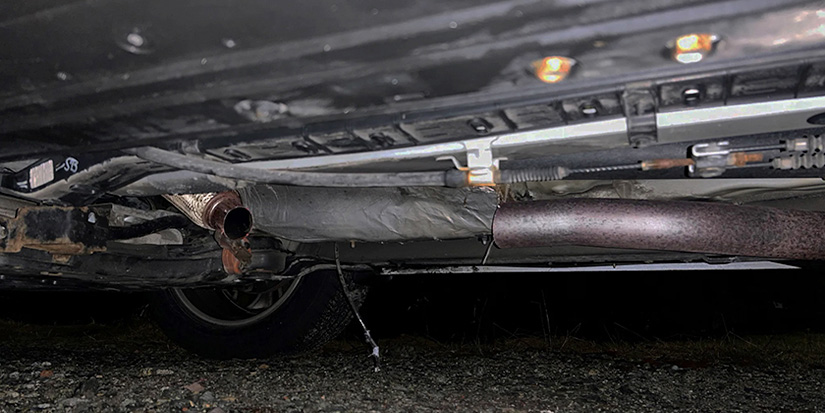
Photo courtesy Coquitlam RCMP
Catalytic Converter Theft: What You Need to Know

Published 3:26 PDT, Tue September 8, 2026
Last Updated: 10:13 PDT, Mon September 14, 2026


-
BY BEZ CHAO
Catalytic converter theft rates saw a dramatic increase in recent years. This might seem like an odd trend since catalytic converter theft has already been around for decades, but there’s a good explanation for this. To better understand this phenomenon, we need to understand what catalytic converters do and how they accomplish it.
Catalytic converters are located on the underside of a vehicle as part of the exhaust system. They’re devices that control exhaust emissions using a chemical reaction to transform toxic pollutants like carbon monoxide, unburned hydrocarbons, and nitrogen oxides into safer gases like carbon dioxide, nitrogen, and water vapour before they exit the tailpipe.
The first catalytic converter was patented in the 1950s by a French engineer, but it wasn’t until the 1970s that they became more widely adopted. In 1975, Canada introduced initial tailpipe emissions standards, leading many automakers to voluntarily or selectively install two-way oxidation catalytic converters on new vehicles. From 1981 to 1987, despite the U.S. making catalytic converters mandatory across the board, some smaller or cheaper vehicle imports in Canada still skipped them. By 1988, the federal government formally mandated strict emission rules matching U.S. standards, ensuring every new gasoline passenger vehicle sold or imported into Canada was equipped with a catalytic converter (typically advanced three-way oxidation systems reduce nitrogen oxides as well).
If catalytic converters have been around since the 70s, why has there been a sudden uptick in their theft? One of the main reasons why catalytic converter theft has been on the rise over the last several years is because of the value of the rare earth metals found inside — like platinum, palladium, and rhodium — which are responsible for the chemical reaction that neutralizes the engine’s harmful emissions. Rhodium in particular is one of the rarest and most expensive metals on earth, more expensive than gold. The price of rhodium surged to its peak in March 2021, due to supply shortages and industrial demand. This, coupled with the fact that stealing catalytic converters is a relatively low-risk, high-reward crime, has contributed to climbing catalytic converter theft rates.
Data from CrimeMaps for the Richmond area reported 438 thefts from vehicles from the beginning of this year through July. For context, thefts from vehicles jumped from 609 in 2022 to 1296 in 2023. CrimeMaps recorded 774 thefts from vehicles for all of 2025. It is important to note that catalytic converter theft falls under the “theft from vehicle” category, but not all “thefts from vehicles” involve catalytic converters specifically.
Catalytic converter theft can be especially troublesome for victims not only because of the costs associated with replacement, but also because of the requirements of the Canadian Environmental Protection Act (CEPA 1999) that prohibits a vehicle from driving on public roads with a removed, altered, or bypassed catalytic converter, meaning that victims are effectively unable to drive their vehicle until a replacement is installed.
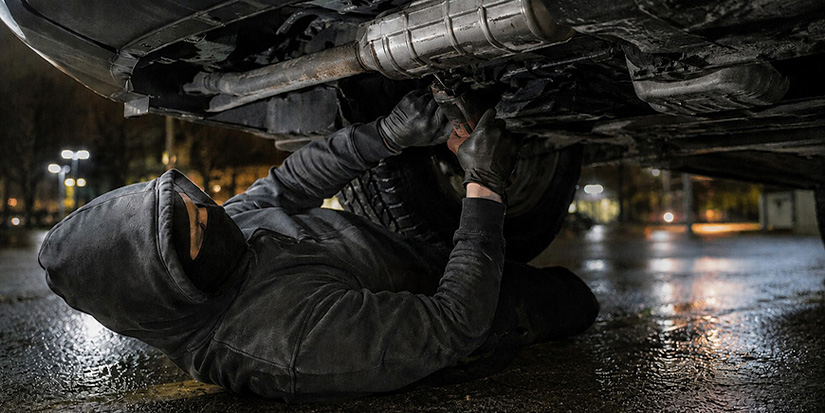
According to a Vancouver Police Department (VPD) press release, catalytic converters are usually stolen between 2am and 4am in the dark of night, although determined thieves can take any opportunity that presents itself regardless of time of day. Thieves will go underneath the car with tools like angle grinders or saws to cut the catalytic converters free from the exhaust system. This whole operation takes only around a minute or two before they’re finished and gone. Thieves will typically target vehicles with higher ground clearance, such as SUVs and trucks, as the additional space underneath makes it easier to access the underside of the vehicle. Older hybrid vehicles are also prime targets because their catalytic converters contain higher concentrations of rare earth metals.
If your catalytic converter is stolen, the police department recommends filing a report immediately. You’ll also need to replace your catalytic converter as soon as possible if you plan on driving your vehicle. You may choose to source and install a replacement catalytic converter yourself, or go through your insurance provider. Depending on your insurance plan and claims history, the replacement cost may be covered subject to a deductible. Most standard policies will not increase your premium immediately following a single claim, but repeated claims may result in increased deductibles or dropped coverage.
The best way to prevent your catalytic converter from being stolen is if you can park your vehicle in a garage. If that’s not an option, there are other preventative measures you can take to reduce your risk and make your vehicle a less desirable target, even if none of them completely eliminate it. Parking your vehicle against a wall or solid barrier limits access to the underside of the vehicle, leaving less space and fewer options to access the catalytic converter. Installing a catalytic converter cover or shield adds a physical barrier. Even though thieves can still cut through or around it, they can increase the time and effort required, which may be enough of a deterrent. Installing a car alarm with a motion or vibration sensor can draw attention to a theft in progress. Motion-sensing cameras and good lighting in your parking area further reduce your vehicle’s appeal as a target. Having your Vehicle Identification Number etched (VIN) onto your catalytic converter makes it harder to resell and may deter thieves planning to sell the unit intact, though it’s less effective against those stripping it purely for the metals inside. The VPD hosted a catalytic converter etching tutorial to do just that.
It also pays to be alert to unfamiliar vehicles that appear to be canvassing your area. If you witness a catalytic converter theft in progress, call 911 immediately. Catalytic converter thieves can strike more than once in the same area, so staying vigilant and sharing information with neighbours who may have experienced the same crime is worthwhile.




















































































































































































2 Hours of free financial consulting
Jai Xin Planning Ltd.
C$120.00 C$0.00

Use any of our home staging service and get a second month rental for free!
MiiX Interiors
C$500.00 C$0.00

Get 10% off any order
Phantom Screens Lower Mainland
C$200.00 C$180.00